
We develop formulations and fill & finish processes for biologics, ADCs, cytotoxics, peptides, and viral therapeutics, built for your manufacturer’s filling line. 170+ of our formulations have advanced to GMP manufacturing.


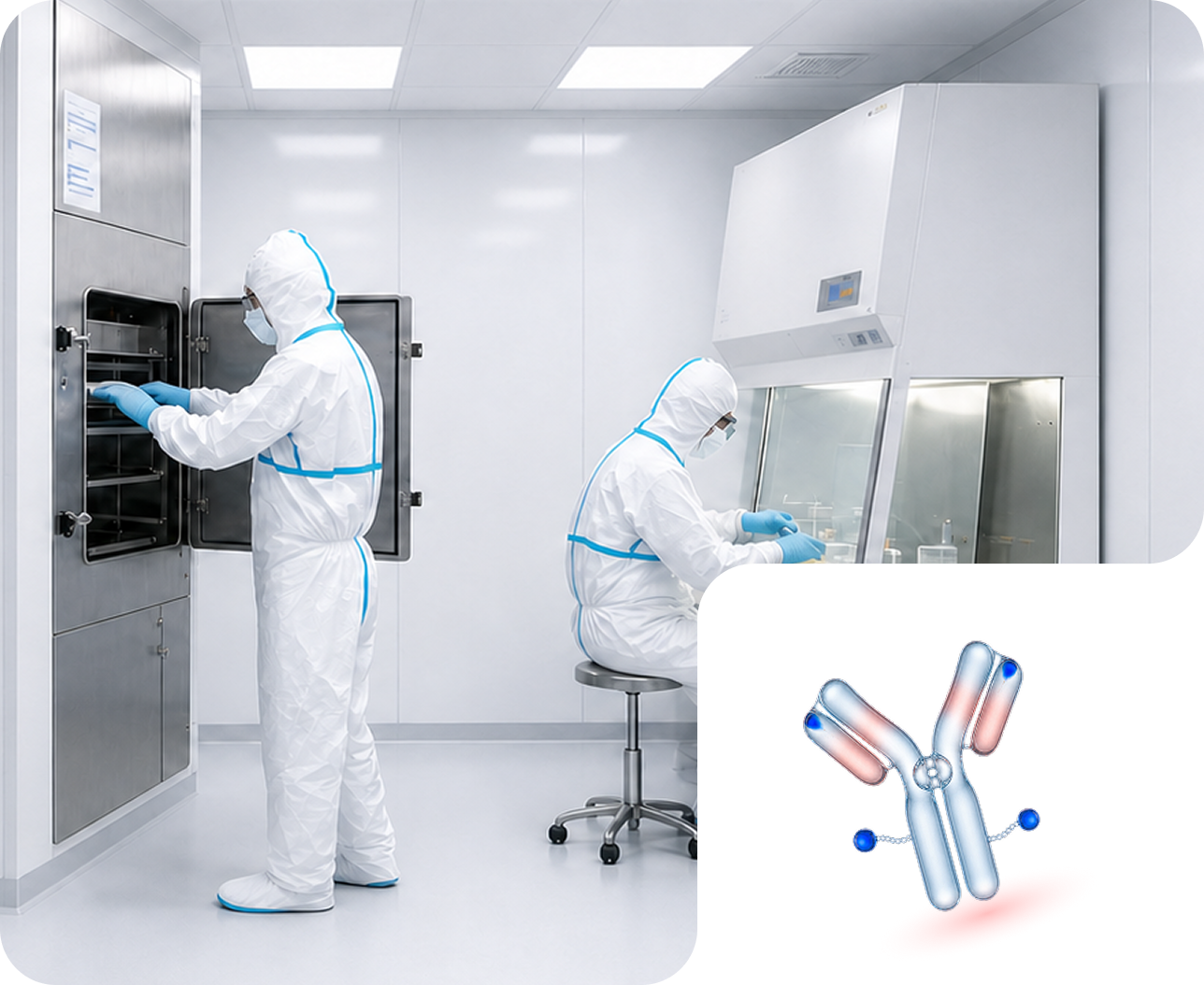
formulations advanced to GMP manufacturing
formulations in clinical trials / with market approval
per pilot batch, biologics laboratory
from scope alignment to project start
A process developed on laboratory equipment meets new conditions at the manufacturer. Filter type and area, pump type, fill speed, hold times, contact materials, and freeze-dryer capacity can all differ from pilot scale.
Each can change shear, adsorption, or temperature history, so aggregation, sub-visible particles, recovery, or residual moisture may shift.
We collect the receiving site’s equipment and process parameters early, then match our pilot processing to them: filter types, filling pumps, hold times, contact materials, and the production freeze-dryer’s limits.
We measure what the line can change: filter compatibility and integrity, recovery after hold times, aggregates and sub-visible particles after filling, fill weight across the fill, and residual moisture after freeze-drying.
Ideally during formulation development, while the formulation can still adapt to the manufacturer’s filling line. Planning can also start just before the first GMP batch; the formulation is then fixed, and the process adapts.
A later manufacturer change or scale-up adds a comparability plan. What decides it: whether a manufacturer is already chosen, and your phase.
To-be-decided: Formulation, primary packaging, and process can still change
Lowest; line limits shape the formulation from the start
Target product profile and the intended manufacturer, if known
A formulation and process designed for scale-up
Development report with the formulation and process rationale
ICH Q8 pharmaceutical development and quality by design
To-be-decided: Process settings and ranges; the formulation is fixed
Moderate; line differences may surface in the engineering run
Final formulation, plus the manufacturer’s line and freeze-dryer specifications
Mock-up at the manufacturer’s settings and a technical transfer document
Technical transfer document: composition, compounding, and lyophilization parameters
ICH Q10 knowledge transfer from development to manufacturing
To-be-decided: Site, equipment, and batch scale; the product is defined
Product quality could differ between pre-change and post-change batches
Current process, batch data, and the new site’s equipment
Adapted process, lyophilization scale-up, and comparability stress studies
Updated transfer document and comparability data for your filing
ICH Q5E comparability of product before and after the change
Each transfer combines a process mock-up, lyophilization scale-up where the product is freeze-dried, and the documents your manufacturer works from.
The mock-up is the go/no-go point: when the process holds at the manufacturer’s settings, we write the technical transfer document from that data.
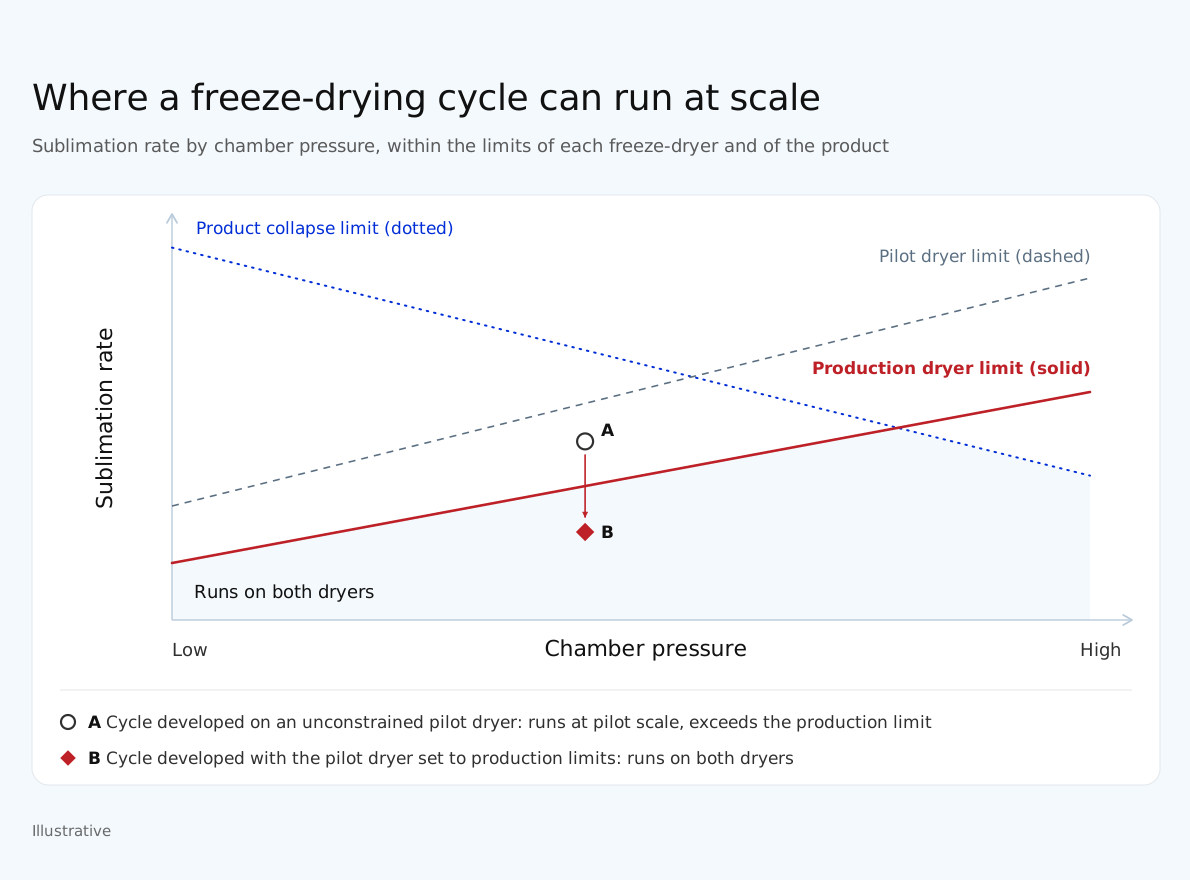
About 60% of our projects are lyophilizates, so most transfers include a cycle. A pilot freeze-dryer can often remove water vapor faster than a production dryer.
A cycle that relies on that capacity may lose pressure control at scale, and product temperature could rise toward collapse. We set our pilot dryer to the production dryer’s limits, test robustness across the design space, and support scale-up.
Under a CDA: your formulation, presentation, and phase, plus the manufacturer’s filling line and freeze-dryer specifications, if chosen. You get a proposal with what we’d mock up, in what order, and how long it takes. Average client satisfaction: 9 out of 10.
Clinical batches are made by your GMP manufacturer. We develop the formulation and process, transfer it to that manufacturer, and make aseptic, non-GMP preclinical batches when your program needs them.
Yes. If you have no manufacturer yet, we can introduce manufacturers we have worked with that fit your presentation, batch scale, and timeline. The choice stays yours.
The composition, the compounding procedure, and the lyophilization process parameters, including the design space where determined. Filter and contact materials are included when they were determined.
Yes. We run a cycle mock-up with our pilot dryer set to the production dryer’s limits, test robustness across the design space, and support scale-up with residual moisture and product temperature data.
Usually 2 to 4 weeks from scope alignment to project start. Starting during formulation development gives the manufacturer’s filling line the most influence on the process.
Yes. We adapt the process to the new site’s equipment and run stress studies that compare pre-change and post-change product, as ICH Q5E describes for comparability.
When the transfer needs it. As standard, we review the printout of the first technical batch and analyze samples taken from critical positions of the GMP line.
Vials from 2R to 100H, prefilled syringes, cartridges, dual-chamber systems, and nest and tub formats, as liquid or lyophilized product.
Didn’t find your question? Conversations and quotes are always free.
Our calls veer technical fast. If we’re not the right partner, we’ll say so.