
Lyophilization development. Short, robust cycles that transfer.
We develop freeze-drying cycles for your formulation and your manufacturer’s freeze-dryer, in vials, dual-chamber syringes, nest and tub, or bulk. 140 lyophilization programs, from proteins to cytotoxics, viral vectors, and liposomes.


Lyophilization work, in numbers
- Cycles as short as quality allows help clients keep their manufacturing slot.
lyophilization development programs since 2010
of clients keep their lyophilization run slot
vials per batch, biologics freeze-dryer
from scope alignment to project start
As short as possible. Robust enough for your manufacturer.
Primary drying is usually the longest step of a freeze-drying cycle, and it runs fastest when product temperature sits close to the collapse temperature. Pilot and production freeze-dryers differ in how they transfer heat and control pressure, so a cycle tuned close to that limit in one dryer could collapse the cake in the other.
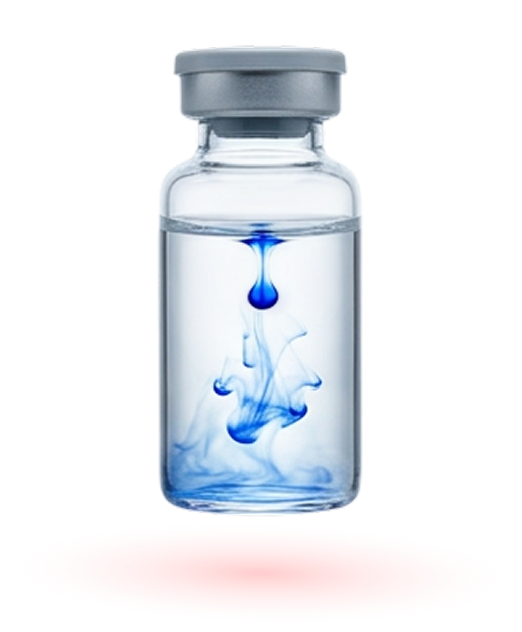
Designed for your dryer
After characterizing the final formulation, we develop the cycle on HOF pilot freeze-dryers with process analytical technology, set to the technical limits of your manufacturer’s production dryer so the cycle is not over-developed.
Our own lyophilization technologies
We use our own technologies for controlled nucleation during freezing, and for critical pressure scanning and collapse monitoring during sublimation. We add annealing where needed and examine cake structure by electron microscopy.
What we look for:
- Collapse
- Shrinkage
- Cracking
- Vial breakage
- Rising residual moisture
- Long primary drying
Where does your cycle start?
Most programs start with a new cycle built for the final formulation. If a cycle already runs, we can optimize it for length and robustness instead.
If batches show defects, troubleshooting comes first. What decides the route is your program’s stage, its batch history, and how much material you can share.
New cycle
Best for: New formulations heading to toxicology batches, then transfer for clinical supply
Final formulation, container, fill volume, and information on your manufacturer’s dryer
Characterize, then set freezing, sublimation, and secondary drying parameters
A robust cycle, with critical process parameters and design space
5 to 6 weeks of cycle development, after project start
Aseptic, non-GMP preclinical batches on the same cycle
Optimize an existing cycle
Best for: Cycles that run well but take longer than needed
Your current cycle parameters, a cycle printout, and product samples
Test shorter parameters while keeping product temperature below collapse
A shorter cycle, confirmed in robustness studies
Scoped after a first review of your cycle
Transfer to your manufacturer, with the design space documented

Troubleshoot a cycle
Best for: Batches showing collapse, cracking, vial breakage, or rising residual moisture
Process parameters, a cycle printout, and 2 to 3 vials
Assess product quality risk, technical weaknesses, and scale-up risk
Assess product quality risk, weak points in the formulation, freezing, and drying steps, and scale-up risk
Identified risks, and where quality and cycle length could improve
Scoped once we see your cycle data
Optimize the cycle, or check your stoppers as well
Three work packages, one cycle
Cycle development runs in three work packages. Characterization sets the limits the cycle must respect, and development sets the parameters for each phase.
A process mock-up then identifies the critical parameters, which robustness studies test across the design space, following Quality-by-Design guidelines.
Characterize the formulation
- Physicochemical characterization of the formulation
- Collapse behavior
- Viscosity, surface incompatibilities, shear sensitivity
- Container format: vial, syringe, or bulk
Develop the cycle
- Freezing with annealing and controlled nucleation
- Sublimation with critical pressure scanning
- Collapse monitoring
- Secondary drying parameters
- Cake structure by electron microscopy
Robustness and transfer
- Mixing, filtration, and filling mock-up
- Critical process parameters
- Robustness studies across the design space
- Aseptic freeze-drying of preclinical samples
- Transfer to your manufacturer
A shorter cycle frees freeze-dryer time, if product quality still holds.
At a manufacturer, freeze-dryer time is booked in slots, so cycle length sets how many batches fit and what each one costs.
We shorten cycles by running primary drying closer to the collapse limit we measure, then confirm the shorter cycle in robustness studies across the design space.
Highlights from recent programs: 60 h to 18 h, 36 h to 10 h, and 49 h to 24 h, enabling two batches per week.
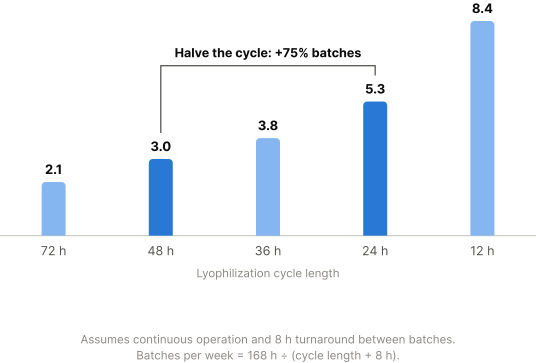
Batches per week on one lyophilizer, by cycle length
Illustrative example, not client data
Send us your formulation. We'll send back a scope.
Under a CDA: your formulation composition, container, and fill volume; the cycle you run today, if there is one; and the freeze-dryer your manufacturer will use. You get a proposal with what we would test, in what order, and how long it takes.
Frequently asked questions and helpful answers
Can you develop a cycle for our manufacturer's freeze-dryer?
Yes. We adapt our HOF pilot freeze-dryers to the conditions of your manufacturer’s production dryer and document critical process parameters and design space for the transfer.
How long does lyophilization cycle development take?
Cycle development usually takes 5 to 6 weeks, and projects start 2 to 4 weeks after scope alignment.
Optimization and troubleshooting are scoped once we see your cycle data.
Do you make aseptic preclinical batches of lyophilized product?
Yes. We produce aseptic, non-GMP preclinical batches for stability and toxicology studies, using sterile-filtered solutions and aseptic freeze-drying.
Clinical supply then transfers to your manufacturer.
Which containers can you freeze-dry in?
Vials, dual-chamber syringes, and containers in nest-and-tub configuration, plus bulk in stainless steel trays and single-use trays or bags.
We develop the cycle in the container your product will use.
Can you freeze-dry formulations that contain organic solvents?
Yes. We have long experience freeze-drying organic-solvent formulations, in vials and in bulk, which can help where an API has limited solubility in water.
Can you handle ADCs and other cytotoxic drugs in lyophilization?
Yes. Cytotoxic products are freeze-dried in a dedicated cytotoxic laboratory with containment up to OEB5 (SafeBridge category 4).
Can you lyophilize high-concentration protein formulations?
Yes. Highly concentrated protein formulations are one of our specialty areas.
Viscosity and shear sensitivity shape how we mix, filter, fill, and freeze-dry them, and a lyophilizate for injection may need a dual-chamber system.
Can you check early whether our liquid formulation can be lyophilized?
Yes. Our preformulation screen can include lyophilization feasibility, so you know early whether a liquid candidate could also be freeze-dried if needed.
Didn’t find your question? Conversations and quotes are always free.
Let's talk about your lyophilization cycle and what it needs next.
Our calls veer technical fast. If we’re not the right partner, we’ll say so.